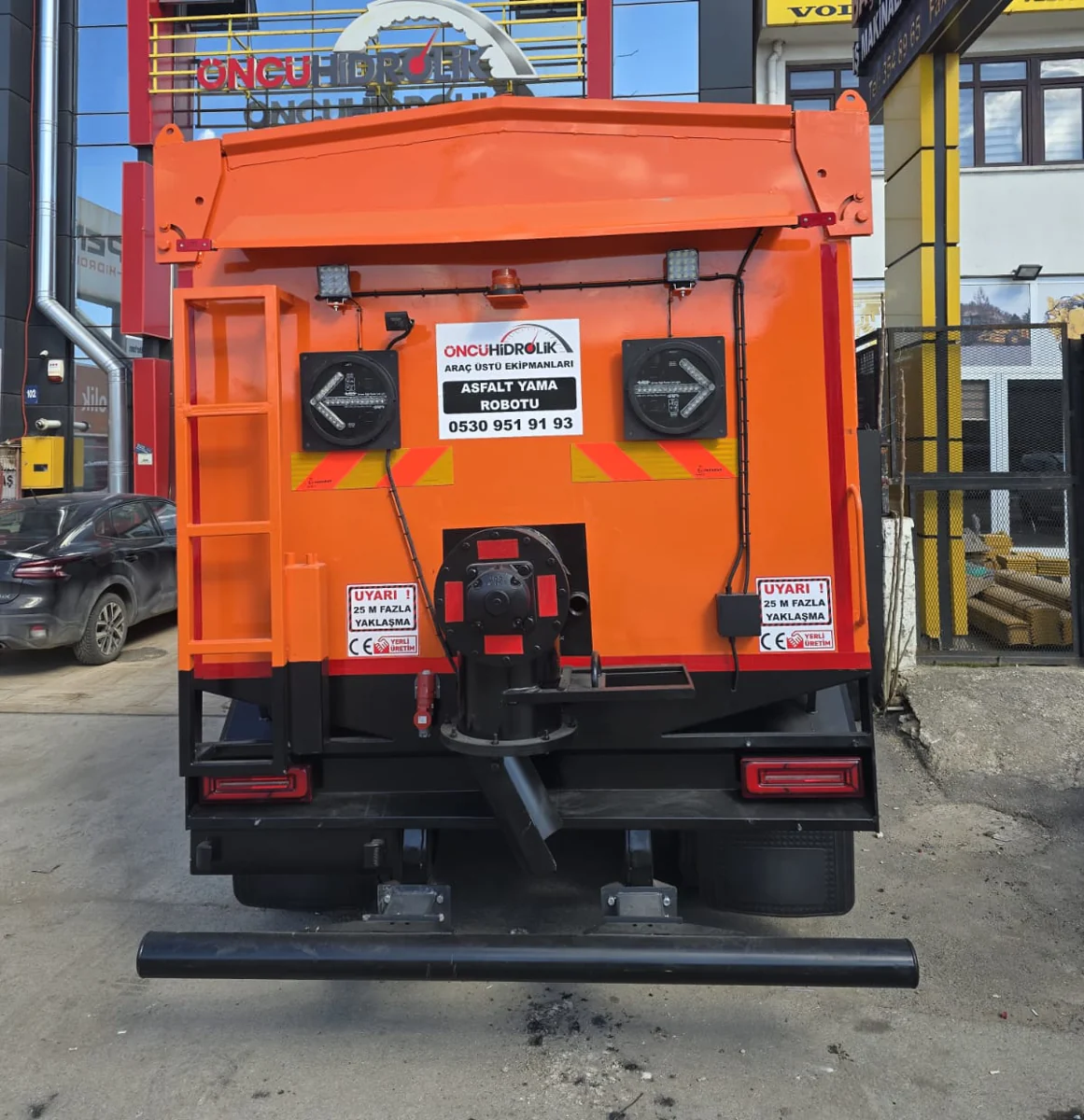

Vehicle-Mounted Equipment
Chip Spreader
Product code: AUE-17
Applications
- Surface dressing works
- Village and provincial road maintenance
- Municipal road construction
- Aggregate spreading against icing
- Construction site and yard roads
What is a chip spreader?
A chip spreader spreads crushed stone aggregate over the road surface in an even layer of the required width. It is usually attached to the rear of a tipper truck; as the truck advances, material from the tipper is distributed onto the road through the machine.
Its role in surface dressing
In surface dressing, bitumen is first sprayed onto the road surface, then chippings are spread and compacted with a roller. Because the bitumen must be covered with aggregate before it cools, spreading the chippings on time and evenly is decisive for the life of the dressing. Uneven spreading leaves excess material in some areas and bare patches in others, which causes both material loss and early failure.
For this reason the chip spreader is part of a work chain that runs together with the asphalt distributor tank, the roller and the road sweeper.
Correct configuration
The tipper and hitch structure of the truck, the width of road to be covered and the aggregate size determine the configuration. Öncü Hidrolik prepares the equipment to suit your existing vehicle and work programme; contact our team for exact values.
Frequently Asked Questions
Which vehicle is the chip spreader used with?
It is usually attached to the rear of a tipper truck. Suitability is assessed according to the tipper and hitch structure of the truck.
How does it differ from an aggregate levelling machine?
Both are used to spread aggregate on the road. The chip spreader is mostly attached to the rear of a truck, while the levelling machine is a towed spreading unit. The suitable option is determined according to the way you work.
What information should I share when requesting a quote for a chip spreader?
The make and model of the carrier vehicle (or the towing unit), the type of road and work, the daily workload and any existing hydraulic equipment define the configuration. Dimensions and capacities are determined together with our team.