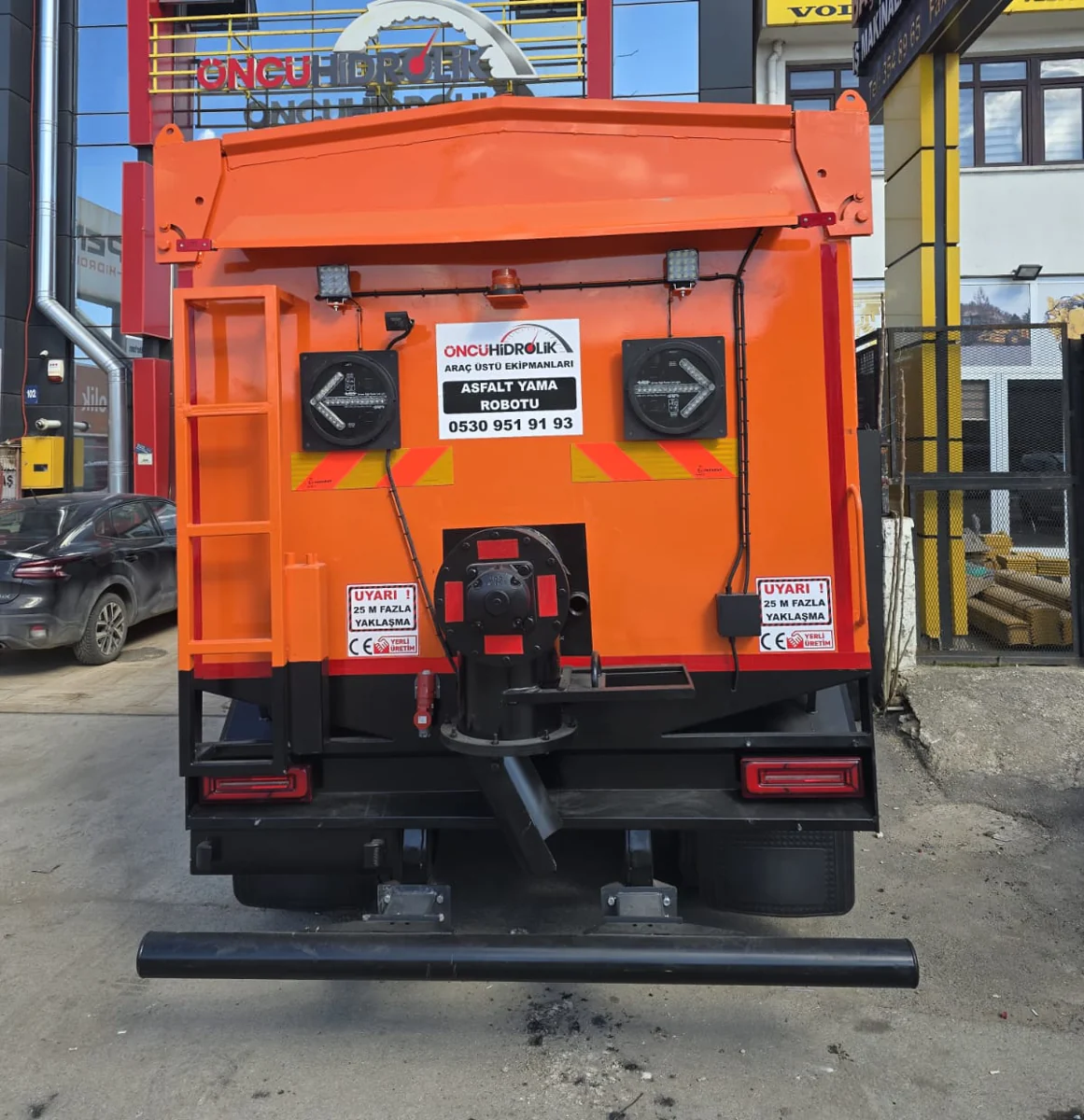

Vehicle-Mounted Equipment
Bitumen Storage and Transport Tank (Roley Tank)
Product code: AUE-12
Applications
- Bitumen storage at asphalt plants
- Bitumen transport within the site
- Bitumen supply for surface dressing
- Road construction sites
- Intermediate bitumen stock areas
What is a bitumen roley tank?
A bitumen roley tank is used to store bitumen at a road construction site or asphalt plant and to carry it to the point where it is needed. Thanks to its wheeled ("roley") structure it can be moved around the site. The tank shell is insulated and fitted with a heating system so that the bitumen stays at a usable viscosity.
Why bitumen must be kept hot
At room temperature bitumen is solid or very viscous; it has to be heated before it can be pumped, sprayed or mixed with aggregate. Keeping the temperature under control in the tank reduces the energy loss of repeated reheating and the ageing of the binder. Insulation quality and temperature control are therefore among the most important criteria when selecting a tank.
Selection and configuration
The required volume, heating method, insulation structure, pump and discharge connections and the way it is transported are determined by the project. Planning it together with an asphalt distributor tank and storage tanks organises the flow of bitumen on site. Contact our team for a configuration that suits your needs.
Frequently Asked Questions
Is a roley tank the same as an asphalt distributor tank?
No. A roley tank is for storing bitumen, keeping it hot and moving it around the site. A distributor tank is used to spray bitumen onto the road surface in a controlled way.
How is the tank volume determined?
Daily bitumen consumption, supply frequency and the way it is used on site determine the volume. If you share this information the suitable configuration is assessed together.
What information should I share when requesting a quote for a bitumen storage and transport tank?
The make and model of the carrier vehicle (or the towing unit), the type of road and work, the daily workload and any existing hydraulic equipment define the configuration. Dimensions and capacities are determined together with our team.